What happens during a Laughter Yoga session?
The Laughter Yoga Experience


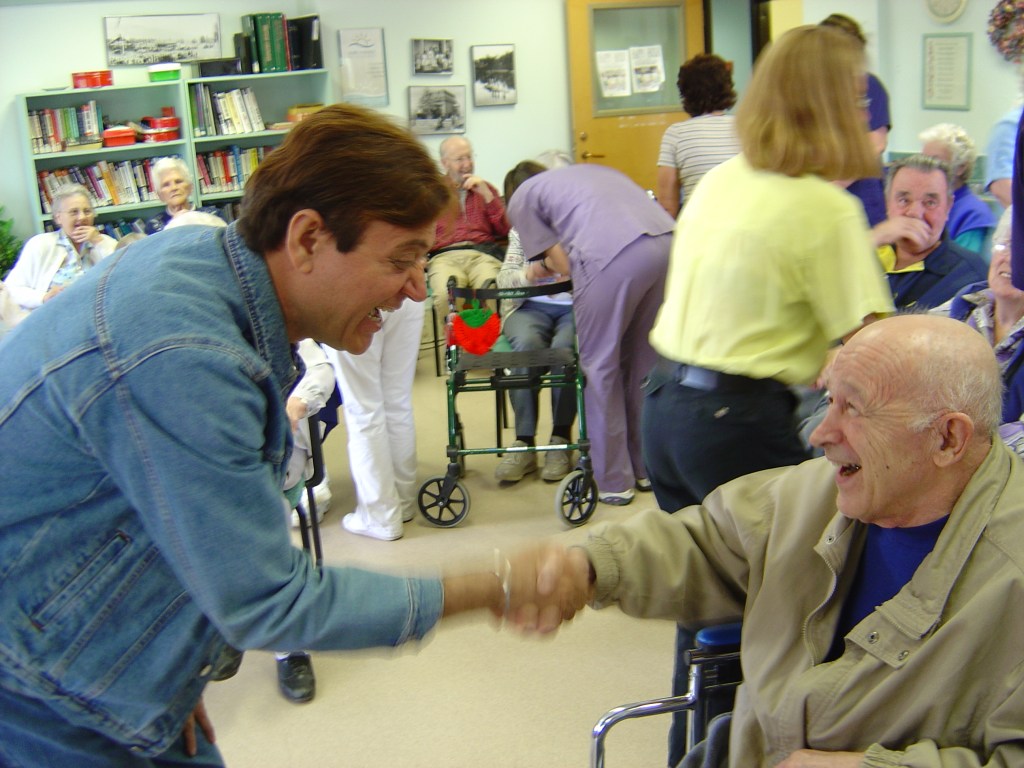
Laughter Yoga is a body mind exercise. We bring joy to the body through lots of laughter, silliness, and deep inhalation and exhalations. Unlike other physical forms of yoga that use still or slow asanas (yoga postures), in most Laughter Yoga classes students will spend much of their time moving around the room, and regularly sharing in each other’s space (which are two reasons why don’t rely on yoga mats and pillows). In seated Laughter Yoga classes, there will be lots of individual movement from the comfort of a folding chair, classroom chair, or wheelchair.
Laughter Yoga looks like a fun day of elementary school recess, with lots of energy and a game-like atmosphere. Some elements of Laughter Yoga classes include:
- Laughter Exercises
- Group experience
- Movement
- Clapping
- Direct Eye Contact with others
- Childlike Playfulness
- Deep Breathing
- Laughter Meditation (laughter, laughter, and more laughter)
- Yoga Nidra (Guided Meditation)
Some Laughter Yoga sessions are very physical (be prepared to sweat). Some sessions are very gentle. Some are very loud, while some are silent. Some sessions have lots of people. Some have very few people. Some sessions are for laughing alone. All sessions involve lots of deep and intentional diaphragmatic breathing.
Note: on some occasions, especially during sessions with children or seniors, a Laughter Yoga leader or teacher may also include music, songs, or dance, and items that invoke joy like silly hats, scarves in bright colors, or balloons. While these items may help establish a fun and festive atmosphere, they are complementary to our Laughter Yoga practice, not essential. In our practice, laughter is unconditional, we laugh because we can, anytime, and any place, without need of anything but our body, our mind, and our willing spirits.
HOW TO PREPARE FOR YOU FIRST LAUGHTER YOGA EXPERIENCE
- Leave the props at home. The amazing thing about Laughter Yoga is that we can commit to the practice without use of props, mats, and special equipment. We bring ourselves to the practice. Unless your leader or teacher specifically asks you to bring items to class, just bring yourself and a personal bottle of drinking water.
- Wear lose, comfortable, clothing which does not restrict your abdomen. Avoid tight belts or strings above the navel area.
- Bring an open mind. During the session it’s perfectly normal to feel silly, stupid, or resistant to the experience. Allow yourself those feelings and give yourself permission to keep participating despite your inner critic.
- Bring a bottle of water and be sure to stay hydrated during and after the session.
LAUGHTER YOGA RULES
We have two rules in Laughter Yoga.
- No talking. This rule is often the hardest. We’re exercising our right brain, getting into our creative side. Talk and process the experience after the session is done.
- No new pain. If an exercise is too strenuous, don’t do it. Laughter Yoga is not a competition. Take a break when you need to, then jump back in at your own pace. Feel free to ask your leader how to modify the exercise to meet your needs.
And our 3rd rule for online classes: enter the practice at your own pace, without judgement nor explanation. We encourage everyone to participate fully, with cameras and microphones on, as we co-create safe space together. And we also know that there are lots of reasons that individuals can’t or aren’t on screen or unmuted during a class. Each of us participates comfortably where we are physically, emotionally, mentally, and technology wise.
Laughter Yoga is an adaptive practice
The beauty of this practices is that it does not rely of specific conditions. It can be practiced anywhere, anytime.

On Zoom, participants have the option to have their camera and microphones on, and soon fake laughter soon becomes contagious, real laughter, and isolation quickly becomes community.
Participating in a view-only webinar formats shows us that we can do this practice whether we are alone, with another person, in a small group, or in the company of hundreds of people.
In person sessions held with participants wearing face masks and/or physically distanced offer opportunities to notice how much we laugh with our whole bodies, and how much we communicate with our various senses and physical body language.
 Laughterly